Learn to Speak a Language in 3 Months
Follow my step-by-step system to go from your current level—even if you’re starting from zero—to understanding native speakers and speaking confidently in real-life situations. Without studying grammar.
Imagine if you could...
- Start having real conversations in your new language instead of spending months waiting until you feel “ready.”
- Know exactly what to practise every day, without jumping between apps, videos, vocabulary lists and different methods.
- Learn the words and sentences you actually want to use, so you can start talking about your life, interests, experiences and opinions NOW.
Most People Spend Far Too Long “Learning” Before They Start Using the Language
If you’re starting from zero, it’s easy to think you need to learn lots of rules, understand all the grammar and finish months of lessons before you can have your first real conversation.
So you study.
You memorize vocabulary.
You learn grammar rules.
You use apps.
You watch videos.
And you keep telling yourself you’ll start using the language when you’re “ready.”
But if you’ve already been learning for a while, you may have discovered something frustrating.
The language you studied isn’t always the language you can actually use.
Maybe you understand your lessons...
But when a native speaker talks at normal speed, everything suddenly seems to blur together.
Words you know on paper become almost unrecognizable when you hear them in a real sentence.
And even when you understand what someone is saying...
When it’s your turn to answer, the words don’t come.
You hesitate.
You translate in your head.
You construct sentences piece by piece.
Or you simplify what you wanted to say because you can’t find the words quickly enough.
So you can end up stuck from both directions:
You can’t always understand the language you hear...
And you can’t easily produce the language you know.
The problem isn’t necessarily that you haven’t studied enough.
It’s that traditional studying can leave a huge gap between knowing the language and actually using it in real time.
And trying to close that gap by simply learning more vocabulary and grammar can leave you studying for years.
There’s another way.
Instead of trying to learn the entire language before you start using it, you can begin by building the language you personally need...
While training yourself to hear it, understand it, retrieve it and speak it from the beginning.
You don’t need to know thousands of words and all the grammar before you start communicating.
You need enough of the right language to start...
And a system that continually expands what you can understand and say.
Start With the Language You Actually Want to Use
Think about the conversations you’d like to have in your new language.
Introducing yourself.
Talking about your family.
Explaining what you do for work.
Talking about your interests.
Describing where you live.
Telling someone what you did last weekend.
Sharing your plans.
Explaining an opinion.
Telling a story.
These conversations are different for everyone.
So instead of starting with thousands of disconnected words chosen by somebody else...
You’ll start building the language you need.
And one of the most important tools we’ll use to do that is something I call:
Language Islands
A Language Island is a connected group of sentences about one subject that matters to you.
Instead of memorizing disconnected words and hoping you’ll remember how to combine them later...
You build complete blocks of natural language around things you could actually talk about.
For example:
My family
My work
Where I live
Why I’m learning this language
My hobbies
My last holiday
My plans for the future
My opinions
You create what you genuinely want to say.
You turn it into correct, natural language.
Then you don't just read it.
You listen to it.
You hear how the words actually sound when they're spoken together.
You read it aloud.
You repeat it.
You listen again.
And gradually, you begin retrieving it without reading.
This is important because knowing what a sentence means on a page isn't enough.
You want your brain to become familiar with what that language actually sounds like—so the words and patterns you're learning become easier to recognize when you hear them.
At the same time, you're training yourself to produce those same patterns when you want to speak.
So you're developing both sides of a real conversation:
Understanding what you hear...
And being able to respond.
Then Something Important Happens...
As you build more Language Islands, you start speaking more.
And instead of speaking being some terrifying final exam you take after months or years of study...
Speaking becomes part of how you learn.
You answer a question.
Maybe you speak comfortably for 30 seconds.
Then suddenly...
You get stuck.
You don’t know a word.
You use the wrong expression.
You can’t construct the sentence you wanted.
Perfect.
Because you’ve just discovered exactly what you need to learn next.
Your speaking attempt is corrected into natural language.
That corrected language becomes new material for you to listen to, repeat, review and practise.
Then you speak again.
Which exposes another gap.
Which gives you something else useful to learn.
And the cycle continues:
SPEAK → FEEDBACK → LISTEN & REVIEW → SPEAK AGAIN
Instead of studying thousands of things you might need someday...
Your own speaking begins showing you what you need right now.
And because you’re repeatedly listening to natural versions of the language—not simply memorizing written words—you’re also training your ear to recognize the sounds and patterns of the language.
So your ability to understand and your ability to speak develop together.
I'm Mikel Telleria, I speak 12 languages
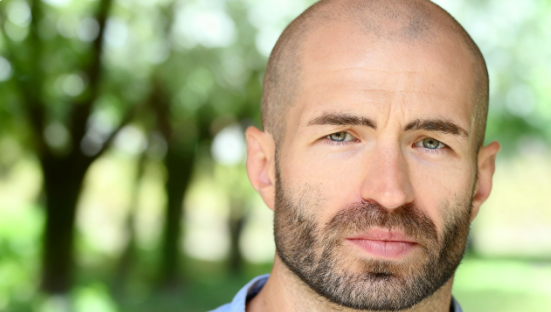
I studied translation and international business, and lived and worked in several countries, in embassies, chambers of commerce and international organizations.
I’ve spent decades learning languages.
I’ve always loved foreign languages. But I was frustrated by how slow traditional classes were.o I started looking for a better way.
I researched language learning obsessively, digging through books, searching online and experimenting on myself. Over the years, I tried just about every method and technique I could find.
Most of them didn’t make much difference.
But a handful worked extremely well.
So I took the most effective techniques, combined them, tested and refined them—and gradually built them into one complete language-learning system.
Using everything I’d learned, I later developed and refined this system at the Innovation Centre of the University of Deusto in San Sebastián.
Today, I use this system to help other language learners through the Hyperlingua app, my coaching and my language-learning channels, followed by more than 200,000 people in 12 languages.
But I’m not telling you this because I expect you to learn 12 languages.
You may only care about one.
What matters is what years of learning languages taught me:
Learning more isn’t enough.
You need a system for deciding what to learn, practising it correctly and progressively turning it into language you can actually use.
And that is the system I’ve turned into:
A Complete 12-Week System for Building and Speaking Your New Language
The Hyperpolyglot Roadmap gives you a structured 12-week step-by-step plan for developing your language from wherever you are today.
Every day you’ll know:
What to learn.
What to practise.
What to repeat.
When to start speaking.
How to use your mistakes.
And what to do next.
Instead of constantly wondering whether you should learn more vocabulary, study another grammar lesson, watch another video or download another app...
You’ll have a clear process to follow.
Here’s how the 12 weeks work.
MONTH 1
Build the Foundations of the Language for YOUR Life
During your first month, you’ll build the foundation you need to start talking about yourself and the things that matter to you.
You’ll work with essential questions, answers and sentence patterns...
While building at least 100 personal Language Islands around your own life.
You’ll discover:
- How to create Language Islands around the conversations you actually want to have
- How to build useful sentences even if you’re starting from zero
- How to use essential questions, answers and language patterns instead of memorizing endless disconnected words
- How to listen to and repeat correct sentences so you’re training pronunciation while you learn
- How to identify difficult sentences and practise them until they become easier to produce
- How to start retrieving familiar language without reading it
- How to organize your practice without creating a complicated study system you’ll abandon
By the end of the first month, you won’t simply have completed a collection of lessons.
You’ll have built a growing library of language about your own life that you can begin using.
MONTH 2
Turn Your New Language Into Fluent Speech
Now speaking becomes a major part of your practice.
During Month 2, you’ll work toward completing approximately 300 personalized speaking blocks.
Each speaking block lasts around 30–60 seconds.
You answer a question.
You try to express what you genuinely want to say.
And whenever you struggle, hesitate or discover something you can’t express...
You’ve found your next learning opportunity.
You’ll discover:
- How to practise speaking without needing another person available every time
- How to use AI to generate questions and practise conversations
- How to identify the exact vocabulary and structures you’re missing when you speak
- How to turn corrected speaking attempts into new Language Islands
- How to practise speaking in convenient blocks throughout your day
- How to turn mistakes into useful learning material instead of becoming frustrated by them
- How to use active recall so you’re practising retrieving language rather than simply recognizing it
Your learning cycle becomes:
Speak → Feedback → Correct → Review → Speak Again
And every time you repeat that cycle, you build more of the language you personally need.
MONTH 3
Make Speaking the New Language Easy & Natural
By Month 3, you’ll have built a much larger foundation of personally relevant language.
Now you continue expanding it while depending less on prepared material.
You’ll speak.
You’ll discover gaps.
You’ll correct them.
You’ll practise them.
And you’ll speak again.
You’ll learn how to:
- Continue generating new Language Islands from real speaking practice
- Retrieve familiar language without relying on prepared answers
- Identify recurring weaknesses and target them directly
- Increase the volume of your speaking practice
- Strengthen difficult sentences through focused repetition
- Turn everyday moments into opportunities for language practice
- Continue expanding your vocabulary through the things you actually want to say
- Build a routine you can continue after the first 12 weeks
By this point, something fundamental has changed.
You’re no longer waiting until you’ve “learned the language” before you use it.
Using the language has become natural.
“But I’m a Complete Beginner. How Can I Speak If I Know Nothing?”
You don’t start by throwing yourself into a complicated conversation and hoping for the best.
You build your foundation first.
You’ll begin with essential questions, answers, high-frequency sentences and simple patterns.
You’ll listen to them and repeat them, so you’re learning what the language sounds like from the beginning—not just what it looks like on a screen.
Then you’ll use that language to start building your own Language Islands.
Little by little, you’ll understand more.
You’ll have more things you can say.
And as your foundation grows, speaking and listening become bigger parts of your practice.
You don’t wait until you know “the whole language.”
You build enough language to take the next step...
Then the next...
Then the next.
“What If I’ve Already Been Learning for Years?”
Then you don’t need to pretend you’re a beginner.
The same system can start from where you are.
Maybe your biggest problem is speaking.
Maybe you can read reasonably well, but native speakers still sound impossibly fast.
Maybe you understand quite a lot but freeze when you have to answer.
Or maybe all three are happening at once.
Instead of simply acquiring more information, you start turning the language you’re learning into something you can recognize, retrieve and use in real time.
You listen.
You speak.
You discover what’s missing.
You get feedback.
You practise it.
And you try again.
The system adapts around the language you need to develop.
“What About Understanding Native Speakers?”
This is one of the biggest frustrations language learners have.
You can know every word in a sentence on paper...
Then hear a native speaker say that same sentence and wonder:
“Where did all the words go?”
Real speech doesn't sound like a vocabulary list.
Words run together.
Sounds change.
Native speakers speak faster than the carefully recorded audio you're used to.
And if you've mainly learned through reading, grammar exercises and memorization, your eyes may recognize language that your ears don't yet recognize quickly enough.
That's why listening isn't something we save for later.
You’ll repeatedly listen to correct, natural sentences while working with language you can understand.
You can slow difficult sentences down.
Listen again.
Repeat them.
Then gradually increase the speed.
As your ear becomes familiar with the sounds, sentence patterns and rhythms of the language, you progressively train yourself to recognize them when you hear them.
The goal isn't just to learn what the language means.
It's to train your brain to recognize what it sounds like.
“And What About Pronunciation?”
The same process works in the other direction.
When you listen carefully and repeat natural sentences, you’re not only training your comprehension.
You’re training your pronunciation at the same time.
You hear the sentence.
You repeat it.
If something is difficult, you slow it down.
You listen again.
You repeat it again.
Then gradually increase your speed.
So you’re not learning the language only with your eyes.
You’re training your ears and mouth alongside your memory.
And that’s the bigger goal of the Hyperpolyglot system:
Not simply to know more of the language...
But to understand it when you hear it—and to speak it fluently and with confidence when you want to.
And You Won’t Have to Figure This Out by Yourself
Knowing the system is one thing.
Actually following it consistently is another.
That’s why the Hyperpolyglot Roadmap gives you a plan for the entire 12 weeks.
You’ll receive one new module each week, showing you what to focus on next.
Inside, you’ll get:
- The complete 12-week roadmap
- Clear daily and weekly instructions
- The Language Island creation process
- AI speaking-practice instructions
- Hyperlingua study guidance
- Monthly targets and progress milestones
- Weekly completion checklists
- Guidance for adapting the system to your current level
- A continuation plan for what to do after your first 12 weeks
So when you sit down to practise...
You don’t have to ask:
“What should I do today?”
You already know.
You’ll Also Get My Guidance Along the Way
Because even the best system is difficult to follow if you’re trying to do everything alone.
As a member of the Hyperpolyglot Academy, you’ll be in a private community of language learners who are working toward the same goal:
Actually using the languages they’re learning.
Inside the Hyperpolyglot Academy, you’ll get access to:
- Live community calls
- Language-learning workshops
- Challenges and accountability
- Support when you get stuck
- Other serious language learners following the same system
- Help implementing what you’re learning with your own target language
So instead of watching another language-learning video, feeling motivated for a day and then falling back into your old routine...
You’ll have a system to return to every day.
Stop Guessing What You Should Study Next
Think about how easy it is to spend money trying to learn a language.
Another app.
Another subscription.
Another textbook.
Another course.
Another tutor.
Another speaking platform.
Another AI tool.
And after collecting all of them, you can still be left asking:
“Okay... but what exactly should I do every day?”
That’s the problem the Hyperpolyglot Roadmap is designed to solve.
You’re not getting another random collection of language-learning information.
You’re getting a 12-week implementation system showing you how to build the language you need...
Practise it...
Speak it...
Discover your gaps...
Correct them...
And keep moving forward.
Follow My Complete 12-Week Language-Learning Plan—with Group Coaching From Me Along the Way
Get access to:
- The complete 12-week Hyperpolyglot Roadmap
- Your step-by-step weekly roadmap
- The complete Language Island system
- AI speaking-practice workflows
- Hyperlingua learning guidance
- Weekly implementation checklists
- Progress targets and milestones
- Weekly Hyperpolyglot Academy community calls
- Workshops, challenges and accountability
- The private Hyperpolyglot Academy
Who This Is NOT For:
I want to be clear about something:
The Hyperpolyglot Roadmap is not a passive language-learning program.
It’s not for you if you’re looking for a shortcut where you watch a few videos, do nothing with what you learn and somehow become fluent.
You’ll need to actually use the language.
That means creating your Language Islands.
Listening and repeating.
Practising active recall.
Doing your speaking exercises.
Getting feedback.
Reviewing your corrections.
And showing up consistently week after week.
I’ll give you the complete plan.
I’ll show you exactly what to do.
And through group coaching, I’ll be there to help you when you get stuck.
But I can’t do the practice for you.
If you only want to watch videos and learn passively?
This learning method isn’t for you.
But if you’re willing to put the system into practice consistently for the next 12 weeks—even when it feels uncomfortable at first—then I’ll give you the structure, tools and guidance to make that effort count.
You bring the hard work. I’ll show you what to do with it.
The Hyperpolyglot Roadmap gives you a complete plan to follow, plus my guidance through group coaching.
But maybe you want more individual attention.
Maybe you’re learning a language for an important move abroad.
For your career.
For your partner or family.
For an upcoming opportunity.
Or perhaps you’ve already spent years trying different approaches and want somebody to look at your specific situation and tell you what to focus on.
That’s why there’s another way to work with me.
Personalized Language Coaching
Follow the Same System With Personal Guidance, Accountability and a Plan Built Around You
With personalized coaching, we’ll use the same underlying system...
But I’ll personally help you adapt it around:
- Your current language level
- Your target language
- Your personal goals
- The situations in which you actually need to speak
- Your available study time
- Your previous language-learning experience
- Your strengths and weaknesses
- The obstacles currently slowing you down
You’ll know what to focus on...
What to stop wasting time on...
And how to adapt the system as your language develops.
This option is designed for learners who want more individual support, feedback and accountability while implementing the system.
If you want me to work with you personally for the next 3 months and help you build the fastest path toward your language goals, apply below.
Which Option Is Right for You?
Both options give you the Hyperpolyglot Roadmap—my complete 12-week intensive plan for learning and speaking your new language.
The difference is how much direct access to me and personal support you want along the way.
Option 1: The Hyperpolyglot Roadmap with Group Coaching
Follow My 12-Week Plan—and Get My Help Inside the Hyperpolyglot Academy
This isn't just a course you buy, watch and then try to figure out on your own.
You'll follow the Hyperpolyglot Roadmap, my complete 12-week intensive language-learning plan, while also joining me inside the Hyperpolyglot Academy for ongoing group coaching.
The Roadmap gives you the structure.
I'll show you what to focus on each week, how to build your Language Islands, how to practise speaking, how to use AI effectively, how to identify your gaps and how to turn those gaps into your next learning material.
And when you need help implementing it, you can get help from me inside the Academy.
As a Hyperpolyglot Academy member, you'll get:
- The 12-week Hyperpolyglot Roadmap, taking you step by step through the system
- Regular group coaching with me, where I help you implement the system and answer your questions
- Help adapting the Roadmap to your language, level and goals
- Feedback when you're unsure whether you're practising correctly
- Help identifying what's slowing down your progress and what to focus on next
- Workshops where we go deeper into specific parts of language learning
- Accountability to help you actually follow through on the plan
- Access to other serious language learners following the same system
- Hyperlingua Pro+ access to support your daily language practice
So although you'll implement the system independently between sessions, you won't be doing it alone.
You'll have the Roadmap telling you what to do—and access to me through group coaching when you need guidance.
Start the 12-week Hyperpolyglot Roadmap and join my group coaching inside the Academy.
Option 2: Work With Me Personally for 3 Months
Get a Personalized 12-Week Plan Built Around Your Goals—with My Personal Guidance Every Step of the Way
If your language goal is especially important—or you simply want the fastest, most personalized way to implement my system—you can apply to work with me individually.
Instead of following the standard plan and getting my help through group coaching, I'll work with you personally for the full 3 months.
We'll adapt everything around:
- Your current level—even if you're starting from zero
- The specific language you're learning
- Why you need the language and what you want to be able to do with it
- Your available time and daily schedule
- Your previous language-learning experience
- Your strongest and weakest areas
- The conversations and situations you need to prepare for
- The specific obstacles that are slowing you down
I'll help you decide exactly what to work on, what to prioritize and what to change as you progress.
Instead of wondering whether you're following the system correctly, you'll have me looking at your situation and helping you adjust it along the way.
Your 3-month individual coaching includes:
- 3 months of personal coaching with me
- A language-learning plan adapted specifically to you
- Personal guidance implementing the Hyperpolyglot system
- Individual feedback and accountability throughout the 12 weeks
- Help adjusting your strategy as your language develops
- Lifetime access to the Hyperpolyglot Academy after your individual coaching ends
- Lifetime access to Hyperlingua Pro+ after your individual coaching ends
Frequently Asked Questions
I’m a complete beginner. Is the Hyperpolyglot Roadmap suitable for me?
What if I already speak some of the language?
Which languages does this work for?
Will you actually help me, or is this just a prerecorded course?
What’s the difference between the Hyperpolyglot Roadmap and the Hyperpolyglot Academy?
What happens after I finish the 12-week Hyperpolyglot Roadmap?
Does “3 months” mean I’ll be completely fluent after exactly 12 weeks?
How much time do I need to spend each day?
Do I need a private tutor or conversation partner?
Do I need to be good with AI or technology?
What’s the difference between Group Coaching and Individual Coaching?
I’m not sure I need Individual Coaching. Which option should I choose?
How do I cancel my membership and stop future payments?
You can spend the next three months doing more of what you’ve already been doing...
Keeping the streak alive.
Watching more videos.
Counting hours of input.
Studying more grammar.
And waiting until you finally feel ready to speak.
Or you can spend the next 12 weeks actually building a language you can use.
Build useful language.
Listen to it.
Repeat it.
Retrieve it.
Speak it.
Find the mistakes.
Correct them.
And speak again.
You don’t need to learn the entire language before you begin using it.
You need a clear system—and 12 weeks of consistently putting it into practice.